



Welcome to the next phase of your baby's culinary adventure! Between 7 and 9 months, your little one is likely becoming a more confident and adventurous eater. This is the perfect time to build upon the foundation you've established by introducing a wider variety of foods, textures, and flavors. While breast milk or formula is still a vital part of their diet, solid foods will start to play a more significant role in their daily nutrition.
Moving Beyond Smooth Purees: The Importance of Texture
This age is a critical window for introducing more complex textures. It helps develop the oral motor skills needed for chewing and speaking. Don't be afraid to move from silky-smooth purees to thicker, lumpier mashes.
- How to Do It: You can simply blend your purees for a shorter time or mash soft-cooked foods with a fork instead of blending. Think mashed banana, mashed avocado, or well-cooked, mashed sweet potato.
Introducing Key Food Groups:
- Protein: Now is the time to regularly offer protein-rich foods. These are crucial for growth and development. Good sources include pureed or finely minced chicken, turkey, and beef; mashed lentils, beans, and chickpeas; and full-fat yogurt and cottage cheese.
- Healthy Fats: Continue to focus on healthy fats for brain development. Avocado remains a star, but you can also stir a small amount of thinned-out almond or peanut butter (if allergens have been safely introduced) into their oatmeal.
- Iron + Vitamin C: Continue to offer iron-rich foods daily. A great nutritional tip is to pair iron sources with a food high in Vitamin C, as this dramatically increases iron absorption. For example, serve lentil puree alongside a puree of red bell pepper, or mix iron-fortified oatmeal with strawberry puree.
The Beginning of Self-Feeding
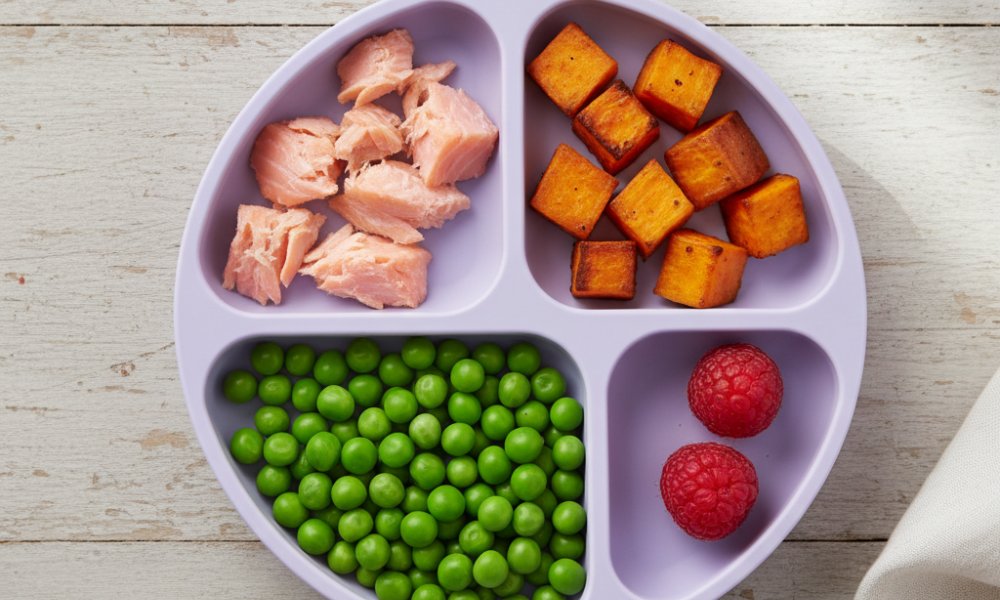
You may notice your baby trying to grab the spoon or reach for food. This is a great sign! Encourage their independence by offering soft, safe finger foods. These should be large enough to grasp but dissolve easily in the mouth. Puffs, teething wafers, and very soft-cooked, spear-shaped pieces of sweet potato or zucchini are excellent first finger foods.
Be the First to Comment