

When you put love and effort into making nutritious homemade baby food, the final step is ensuring it's served safely. A baby's immune system is not as robust as an adult's, making them more susceptible to foodborne illnesses. Following these simple but strict food safety rules is essential for protecting your little one's health.
Safe Storage:
- Refrigerating: Freshly made purees can be stored in an airtight container in the refrigerator for up to 48 hours (2 days). For purees containing meat, poultry, or fish, it's safest to limit this to 24 hours. Store food in the back of the fridge where it's coldest, not in the door.
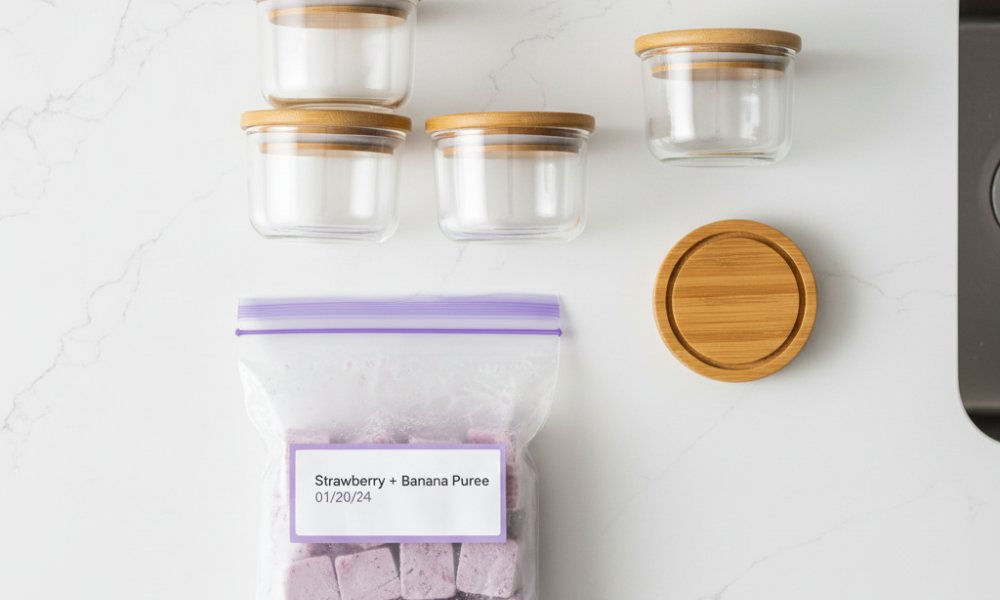
- Freezing: For longer storage, freeze purees immediately after they have cooled. The "ice cube tray hack" is perfect for this. Once frozen solid, transfer the cubes to a labeled freezer bag. Homemade baby food can be safely stored in the freezer for up to 3 months.
Safe Thawing:
Never thaw frozen baby food by leaving it out on the kitchen counter at room temperature. This can allow harmful bacteria to multiply.
- Best Method (Slow and Safe): Thaw the cubes overnight in an airtight container in the refrigerator.
- Faster Method (Water Bath): Place the frozen food in a small, sealed container and submerge it in a bowl of warm (not hot) water.
- Fastest Method (Microwave): Use the defrost setting on your microwave, transferring the food to a microwave-safe dish. This method can create hot spots, so it's less ideal.
Safe Reheating:
- On the Stovetop: Gently warm the puree in a small saucepan over low heat until it is steaming.
- In the Microwave: Heat in a microwave-safe dish in short 15-second intervals, stirring between each interval to ensure even heating and prevent dangerous hot spots.
- The Golden Rule of Reheating: Before serving, ALWAYS stir the food thoroughly and test the temperature on the inside of your wrist. It should feel lukewarm, not hot.
Crucial Final Tip: No Double-Dipping!
Once a baby's spoon has been in their mouth, it introduces bacteria into the food. If you are feeding directly from a larger container, portion out what you need into a separate bowl for that meal. Any leftover food from the serving bowl that has come into contact with the baby's saliva must be discarded. Do not save it for later.
Be the First to Comment