
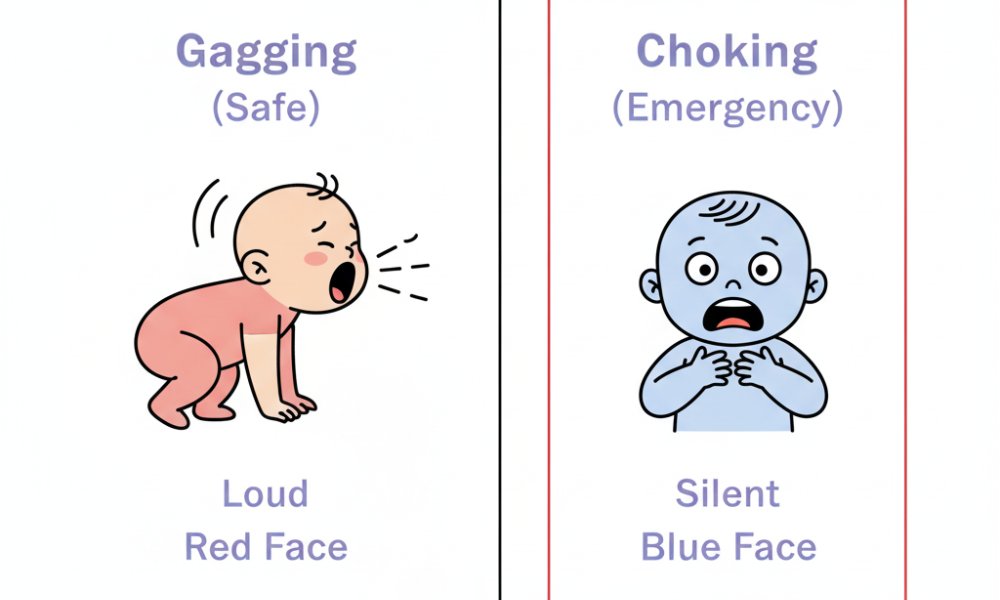


One of the biggest fears for parents starting solids or baby-led weaning is the risk of choking. It can be terrifying to see your baby cough and struggle with a piece of food. However, it is vitally important to learn the difference between gagging—a noisy but safe learning process—and choking, a silent and life-threatening emergency.
Gagging: A Noisy, Normal, and Protective Reflex
The gag reflex in a baby is much more sensitive and farther forward in the mouth than in an adult. This is a brilliant safety feature designed to prevent choking. When a piece of food is too large or moves too far back too quickly, the gag reflex is triggered to push it forward.
What Gagging Looks and Sounds Like:
- It's LOUD: Your baby may cough, sputter, make loud retching sounds, or even vomit.
- Their Skin May Change Color: Their face might turn red as they cough.
- They are Actively Working it Out: They are able to take breaths in between coughs.
What to Do: Stay calm and do not intervene. Do not stick your fingers in their mouth, as this can push the food further back and cause actual choking. Give your baby the space and time (10-15 seconds) to work the food forward on their own. Leaning them slightly forward can help.
Choking: A Silent, Life-Threatening Emergency
Choking occurs when the airway is actually blocked. The baby cannot get enough air to breathe or make noise.
What Choking Looks and Sounds Like:
- It's SILENT: The baby is unable to cry, cough, or make any sound. They may make a high-pitched, whistling noise when trying to breathe.
- Their Skin Turns Blue: The lips, tongue, and face may begin to turn blue due to lack of oxygen.
- They Look Panicked or Go Limp: They may have a terrified look in their eyes or become unconscious.
What to Do: This is a medical emergency that requires IMMEDIATE action. Yell for someone to call for an ambulance. If you are trained, begin infant first aid, which typically involves back blows and chest thrusts.
Understanding this difference is the key to creating a safe and confident feeding environment. Knowing that gagging is a normal part of learning allows you to remain calm, which in turn helps your baby feel safe as they explore new and exciting textures.


Be the First to Comment