
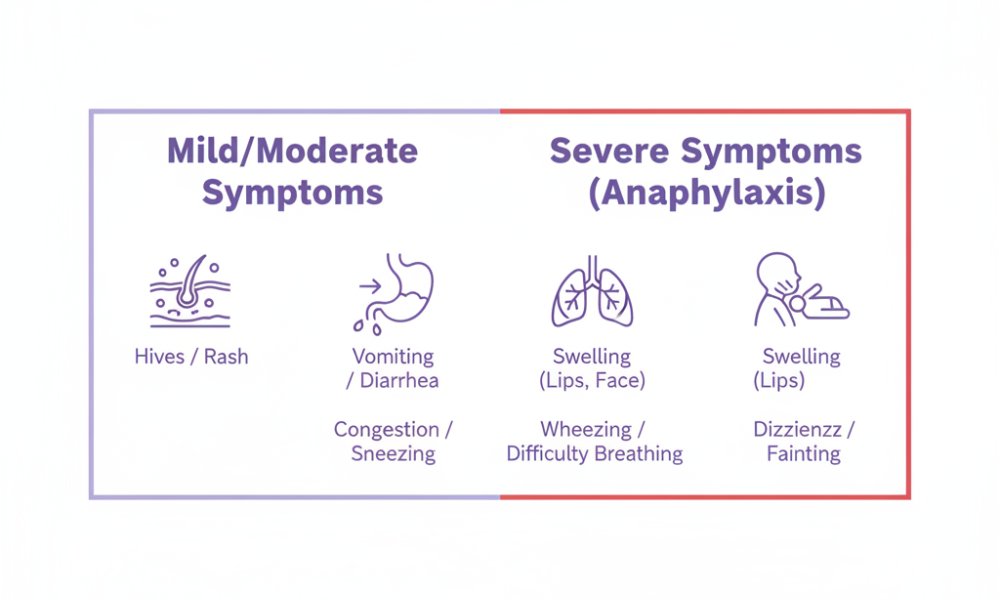


When you're introducing new foods, especially common allergens, it's vital to know exactly what to look for in case of a reaction. Allergic reactions can range from mild to severe, and they can happen within minutes or, less commonly, up to a few hours after eating. Being prepared and knowing the signs will help you act quickly and confidently.
Signs of a Mild to Moderate Allergic Reaction:
These reactions are more common and, while uncomfortable for your baby, are not typically life-threatening. They often involve the skin or digestive system.
- Skin Reactions: Hives (raised, red, itchy welts), a new rash, minor swelling of the lips, face, or eyes, or a flare-up of eczema.
- Stomach Issues: Vomiting, diarrhea, or stomach cramps (your baby might pull their legs up or seem unusually fussy and pained).
- Nasal Symptoms: A runny or stuffy nose, sneezing, or itchy/watery eyes.
What to do: If you notice any of these signs, stop feeding your baby the new food immediately. Take a photo of the reaction (e.g., the rash) to show your doctor. Call your pediatrician or family doctor for advice. They will guide you on the next steps, which may include giving an antihistamine.
Signs of a Severe Allergic Reaction (Anaphylaxis):
Anaphylaxis is a rare but life-threatening reaction that requires immediate medical attention. It often involves multiple body systems and can progress very quickly.
- Breathing Difficulties: Wheezing, shortness of breath, repetitive coughing, a hoarse cry or voice, or trouble swallowing.
- Widespread Swelling: Significant swelling of the tongue or throat.
- Circulation Issues: Pale or blue skin, dizziness, or a sudden floppiness or limpness (loss of consciousness).
- Combined Symptoms: Often, a severe reaction will involve symptoms from two or more body systems at once (e.g., hives and vomiting, or wheezing and swelling).
What to do: CALL FOR AN AMBULANCE IMMEDIATELY (e.g., 911, 112, or your local emergency number). Do not hesitate. If you have been prescribed an epinephrine auto-injector (like an EpiPen), use it as directed by your doctor.
Knowing these signs empowers you to be a calm and effective advocate for your baby's safety.


Be the First to Comment